
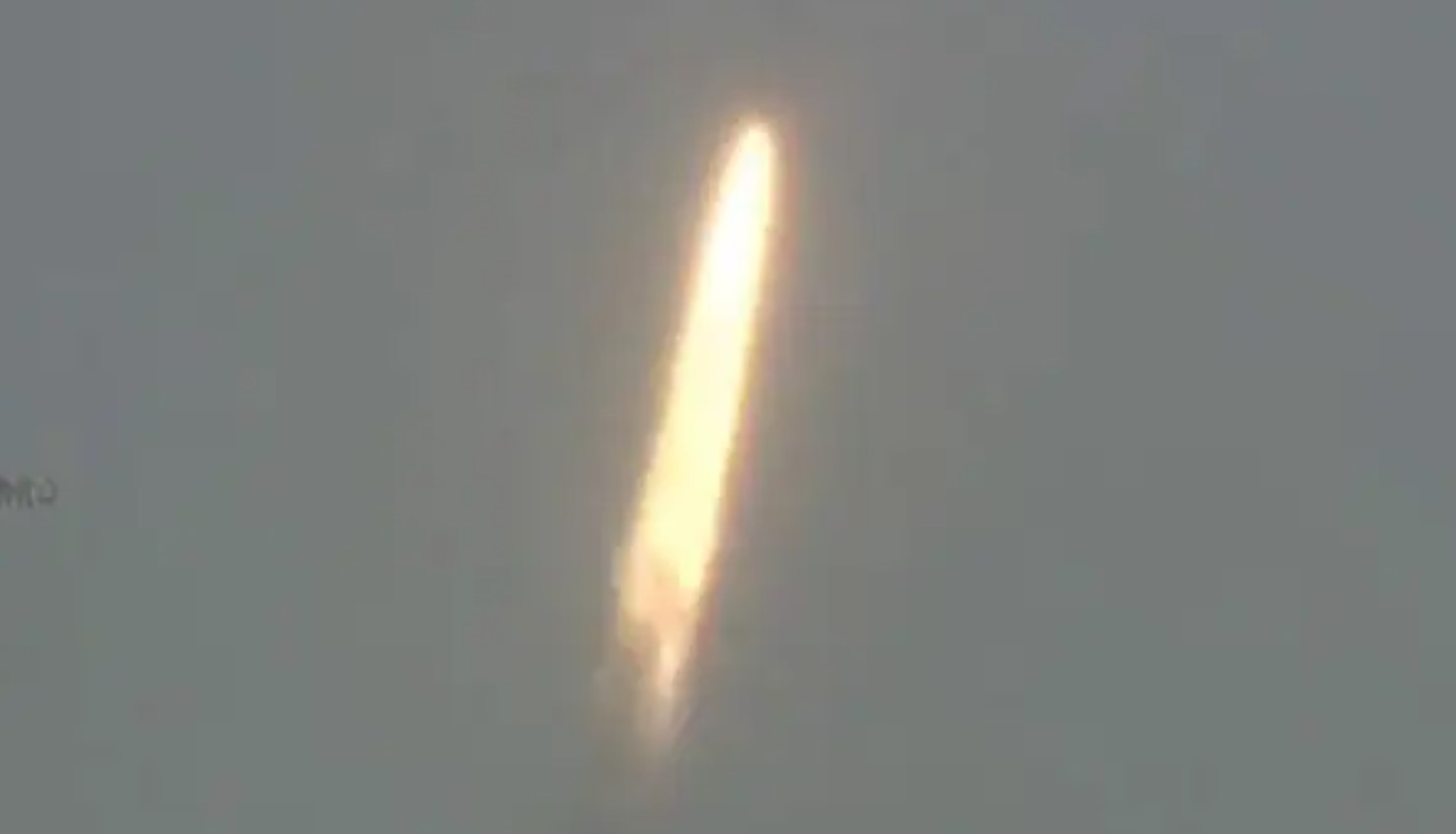
It appears ISRO’s 101st mission from Sriharikota, involving the PSLV-C61 carrying the EOS-09 earth observation satellite, faced a setback on Sunday. While the Polar Satellite Launch Vehicle (PSLV) had a smooth lift-off at the scheduled time of 5:59 am, the mission’s objectives could not be met due to an issue encountered during the third stage.
According to ISRO, the PSLV performed normally up to the second stage. However, during the operation of the third stage, a solid motor system, a drop in the motor’s chamber pressure was observed, leading to the mission’s failure. ISRO stated they are thoroughly analyzing the mission’s performance and will provide updates soon.
EOS-09 was intended to be a follow-on satellite to EOS-04, launched in 2022. Its purpose was to deliver consistent remote sensing data for various operational applications and enhance observation frequency. The satellite carried a Synthetic Aperture Radar (SAR) payload, which can acquire images for diverse earth observation uses in all weather conditions, both day and night. This round-the-clock, all-weather imaging capability is crucial for applications such as agriculture and forestry monitoring, disaster management, urban planning, and national security.
Furthermore, the mission was designed to be debris-free. Scientists had planned to reserve enough fuel to de-orbit the satellite at the end of its operational life, lowering it to an orbit where it would decay within two years, thus minimizing space debris.