
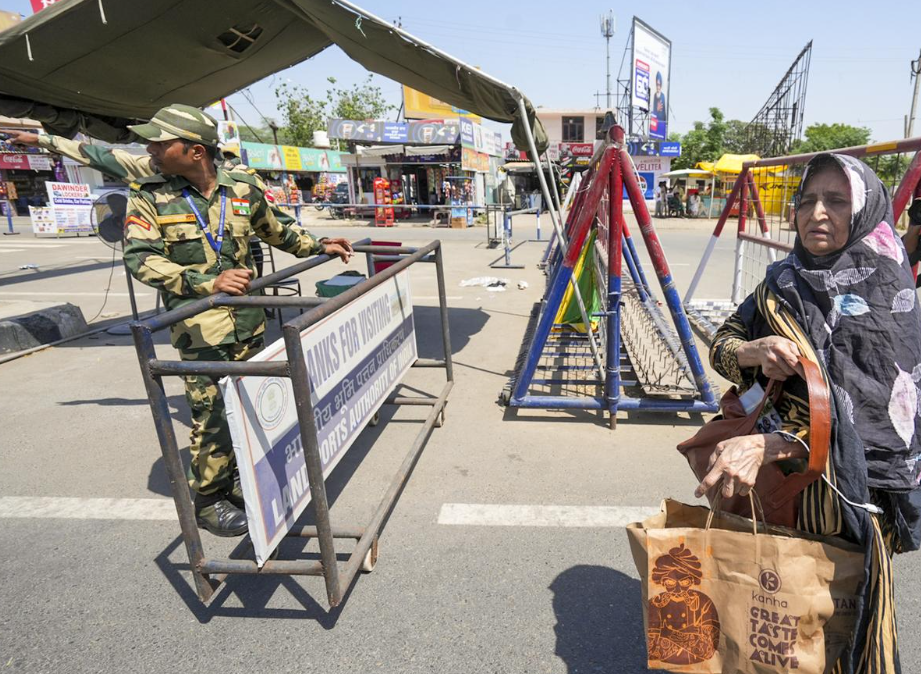
Tears streamed down teenage Sarita’s face as she stood at the Attari border, the Sunday deadline looming large. “My mother’s an Indian, and they won’t let her come with us to Pakistan,” she sobbed, the uncertainty of their next meeting hanging heavy in the air. Sarita, her brother, and their father were among the hundreds of Pakistani nationals hurrying to leave India before the clock struck midnight.
The urgency stemmed from escalating tensions between India and Pakistan following the horrific terror attack in Pahalgam on April 22, which claimed 26 lives. While the exit deadline for Pakistani nationals on SAARC visas had already passed on April 26, Sunday marked the final day for others, excluding those with medical visas valid until April 29.
At the Attari border in Amritsar, a long queue of vehicles bore witness to the hurried departure. Many Indians had come to bid farewell to their Pakistani relatives, the pain of separation palpable in the air.
Sarita’s family had arrived in India for a wedding scheduled for April 29, a reunion after nine long years. “We are Pakistanis,” she explained through her tears, “my brother, my father, and I. But my mother is Indian. And they’re saying she can’t come with us because she holds an Indian passport. My parents married in 1991.”
Like Sarita’s family, many Pakistani nationals had come to India to visit relatives, some for weddings that they now had to miss. A resident of Jaisalmer recounted how his maternal uncle, aunt, and their children, visiting after 36 years, were forced to cut short their trip. “They arrived from Pakistan’s Amarkot on April 15 with a 45-day visa. Nobody anticipated things would escalate like this. They didn’t even get to see all their relatives.”
The Indian government has issued a stern warning: those who remain in the country after the deadline will face legal repercussions under the newly enacted Immigration and Foreigners Act, 2025.
Janam Raj, a 70-year-old from Peshawar, lamented his curtailed visit. “I came three weeks ago on my first trip here with a 45-day visa, and look at how it’s ending.”
Mohd Arif from Delhi, who had come to see off his aunt, vehemently condemned the Pahalgam attack, calling the terrorists “murderers of humanity who deserve to be publicly hanged.”
Mohd Salim from Karachi, another Pakistani national on a 45-day visa, echoed the sentiment of many who had to abruptly end their visits due to the unforeseen circumstances.
Gurbax Singh from Pakistan’s Khyber Pakhtunkhwa province, who arrived in India on April 15, expressed his anguish. “Half of my extended family, including my cousins, live in India. What happened in Pahalgam is utterly reprehensible – a murder of humanity. But it’s us, the visitors, who are bearing the brunt. Many Pakistanis were here for medical treatment, and now they all have to rush back.”
The already fragile relationship between India and Pakistan took a sharp downturn following the Pahalgam terror attack, which New Delhi attributed to Pakistani elements. In the aftermath, India announced a series of retaliatory measures, including visa cancellations, prompting reciprocal actions from Islamabad.