
On Thursday, May 29, India unequivocally rejected a claim made by the United States government in a federal court that a trade offer from then-President Donald Trump was instrumental in averting a war between India and Pakistan earlier this month.
The US government, in a court filing submitted on May 23 to the US Court of International Trade, asserted that the May 10 ceasefire between the two South Asian nations was achieved “only after” President Trump extended an offer of trade access to both India and Pakistan. This claim was made as part of a legal defense against the Trump administration’s tariff policies.
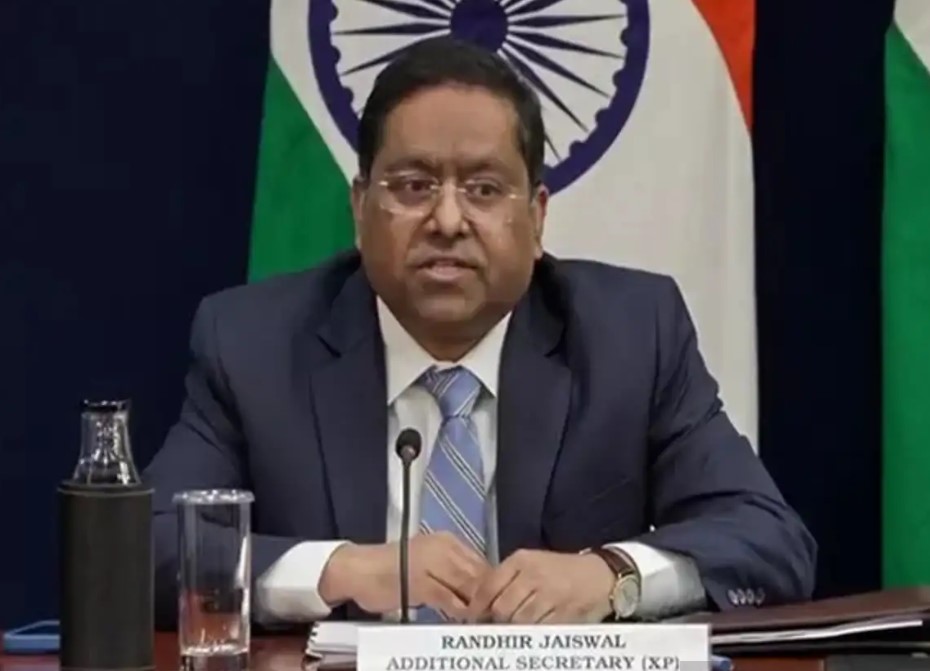
However, India’s Ministry of External Affairs (MEA) spokesperson, Randhir Jaiswal, dismissed this narrative at a media briefing in New Delhi. Jaiswal stated that there was no mention of trade in any discussions between Indian and US officials during the period of heightened tensions. He referred to India’s previously articulated position from May 13, emphasizing that while conversations between Indian and US leaders did occur regarding the evolving military situation from the start of “Operation Sindoor” on May 7 until the cessation of firing on May 10, “the issue of trade or tariff did not come up in any of those discussions.” Jaiswal further reiterated that the External Affairs Minister had clarified that the ceasefire was a result of direct contacts between the Director Generals of Military Operations (DGMOs) of India and Pakistan.
“Operation Sindoor” was an Indian military response initiated on May 7 following a terror attack in Pahalgam on April 22, which New Delhi attributed to Pakistan-based terrorist groups. The operation concluded on May 10 after both sides agreed to halt military actions.
Despite India’s denial, US Secretary of Commerce Howard W. Lutnick, in a sworn declaration supporting the US government’s court filing, defended the use of tariffs under the International Emergency Economic Powers Act (IEEPA). Lutnick argued that such economic tools can influence foreign governments’ actions, citing the India-Pakistan situation as an example. He warned that a ruling against the government in the tariffs case “would have ripple effects across every domain in which economic instruments are used for strategic effect,” and maintained that the Trump administration’s offer of trade access helped prevent a “potentially devastating war” between India and Pakistan.
The legal filing is part of a larger case where small businesses are challenging Trump’s tariff decisions, contending that he overstepped his legal authority.
India has consistently maintained that there was no foreign mediation in the decision to halt “Operation Sindoor,” insisting that the ceasefire understanding was reached through direct military-level communication between India and Pakistan.
While the Trump administration has previously claimed credit for de-escalating tensions between India and Pakistan, this marks the first instance of such a claim appearing in an official US court filing, rather than a public statement or social media post. Indian officials have reiterated New Delhi’s firm rejection of any suggestion of external involvement in its military decisions or diplomatic engagements with Pakistan.

