
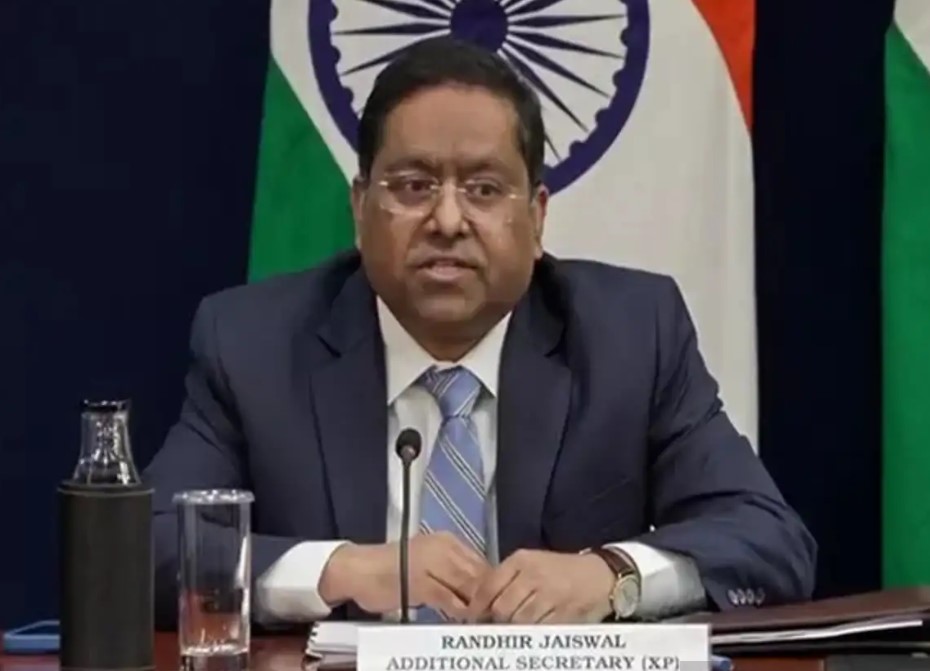
At a media briefing on Tuesday, Ministry of External Affairs (MEA) spokesperson Randhir Jaiswal announced that India would hold the Indus Waters Treaty (IWT) in abeyance. This decision follows India’s April 23 announcement to suspend the water-sharing agreement with Pakistan and is contingent upon Pakistan demonstrably and permanently ceasing its support for cross-border terrorism. The IWT, a 1960 agreement facilitated by the World Bank, has historically represented a significant, though sometimes strained, aspect of cooperation between the two nations.
Jaiswal emphasized the original spirit of the treaty, stating, “The Indus Waters Treaty was concluded in the spirit of goodwill and friendship as specified in the preamble of the treaty. However, Pakistan has held these principles in abeyance by its promotion of cross-border terrorism for decades.” He further explained the rationale behind the suspension, referencing the decision made by the Cabinet Committee on Security (CCS) on April 23, which followed a deadly terror attack in Pahalgam resulting in the deaths of 26 people, primarily tourists. This suspension was presented as part of a broader set of retaliatory measures, which also included the downgrading of diplomatic ties with Pakistan.
Beyond security concerns, Jaiswal highlighted evolving circumstances, noting that “climate change, demographic shifts and technological changes have created new realities on the ground.” This suggests India’s belief that the current form of the treaty may not adequately address these contemporary challenges.
The Indus Waters Treaty allocates the eastern rivers (Ravi, Beas, Sutlej) to India and the western rivers (Indus, Jhelum, Chenab) to Pakistan. Despite periods of conflict, the treaty has generally remained operational. However, in recent years, Indian officials have increasingly expressed concerns about its continued viability given persistent terrorism and a changing regional landscape. Jaiswal’s statement marks a significant shift in India’s position, indicating that the treaty’s future is now directly linked to Pakistan’s actions regarding terrorism.
Jaiswal’s remarks follow shortly after a ceasefire understanding reached through direct communication between the Director Generals of Military Operations (DGMOs) of India and Pakistan. While this has led to a cessation of hostilities, India has maintained that any future cooperation depends on verifiable steps taken by Pakistan to dismantle its terrorist infrastructure. With the Indus Waters Treaty now officially in abeyance, its future course will likely be significantly influenced by broader developments in India-Pakistan relations, particularly concerning the issue of terrorism.