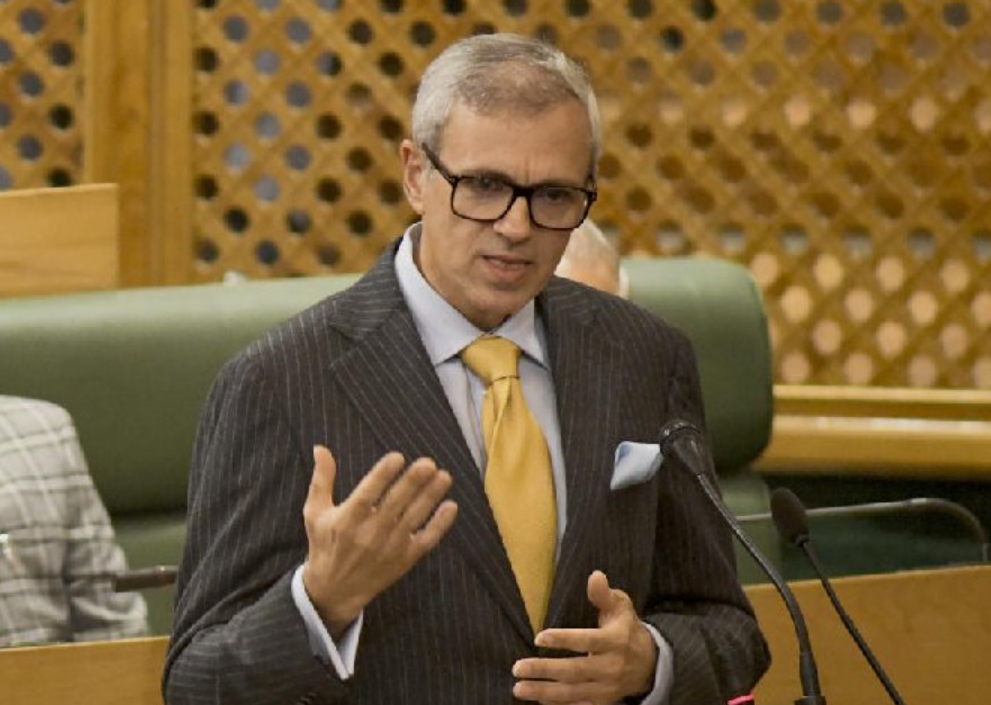
In a special session of the Legislative Assembly, Jammu and Kashmir Chief Minister Omar Abdullah asserted that the Pahalgam attack had spurred an unprecedented “revolt against terrorism” within Kashmir. He conveyed that the widespread grief and condemnation across the region signaled “the beginning of the end of terrorism.”
“For the first time in twenty-six years, I witnessed the people of Jammu and Kashmir rise up and declare, ‘Not in my name,'” Omar stated. “They acted spontaneously, without political orchestration or government directive. They lit candles, carried banners, and silently marched to convey to the perpetrators: whatever your motives, you do not represent us.” This statement was delivered while seeking the assembly’s approval on a resolution condemning the terror attack.
Omar recounted his visit to the police control room, where the bodies of 26 civilians lay. He expressed his inability to console the bereaved families, questioning, “What was their crime?” He paused, then continued, “That they sought peace for the first time, only to pay such a devastating price?”
He reflected on the region’s three-decade-long suffering. “We endured attacks on this very Assembly in 2001. Camps were targeted. Pandit settlements, Sikh colonies no one was spared. We believed those days were behind us. Yet, the April 22nd attack revived the nightmare.”
Despite the tragedy, Omar found a glimmer of hope. “For the first time, Kashmiris did not rationalize, justify, or remain silent. They condemned the act unequivocally. Terrorism cannot be eradicated by force alone. It requires the people’s support, and it appears they are now offering it,” he said.
He highlighted a particularly significant moment at Srinagar’s Jamia Masjid. “Before Friday prayers, the mosque, often a platform for political rhetoric, fell silent. Worshippers observed a two-minute silence for the victims.”
Addressing calls for the restoration of Jammu and Kashmir’s statehood, a prominent issue since the revocation of Article 370, Omar clarified he would not exploit the tragedy for political gain.
“How could I, in good conscience, use the deaths of 26 innocent people to demand statehood from Delhi?” he questioned. “Am I so callous? Are their lives so insignificant that I would use their tragedy as a political bargaining chip? No. May I be cursed if I even consider such a thing.”
He assured the assembly that the pursuit of full statehood would continue, but emphasized that the day was for mourning, not political demands. “Today, there is no politics, no procedural rules, no statehood demands. Only a sincere condemnation of the attack and solidarity with the grieving families,” he affirmed.
Omar shared stories of courage and compassion from the attack’s aftermath. “A young boy risked his life to protect a tourist family, telling the father, ‘They must get past me before they reach your wife and child.’ Boatmen on Dal Lake offered free fruit to tourists, and taxi drivers and hoteliers provided shelter without payment. This is the Kashmir I cherish. This is our hospitality. This is our spirit.”
He acknowledged reports of harassment against Kashmiris in other parts of the country, but commended the swift actions of state governments and police forces to prevent escalation. He also detailed government initiatives, including dedicated helpline numbers and nodal officers, to assist Kashmiris facing threats.
Finally, he issued a stern warning to those spreading misinformation on social media. “Cease your mischief,” he demanded. “Your lies inflict additional suffering on real victims. We will not tolerate it.”
Sources and related content